In the ever-evolving world of display technology, understanding the fundamental differences between various scanning methods is crucial for both professionals and enthusiasts. Two primary scanning techniques have shaped the way we view content on our screens: interlaced scanning and progressive scanning. These technologies represent different approaches to how images are displayed on television screens, computer monitors, and other visual devices.
The Historical Foundation of Scanning Technologies
The development of scanning technologies dates back to the early days of television broadcasting in the 1920s and 1930s. Engineers faced significant challenges in transmitting moving images efficiently over limited bandwidth connections. The interlaced scanning method emerged as an ingenious solution to these early technical limitations, allowing broadcasters to transmit video content while conserving precious bandwidth resources.
During this pioneering era, television systems needed to balance image quality with transmission efficiency. The National Television System Committee (NTSC) and other international broadcasting standards organizations adopted interlaced scanning as the foundation for analog television systems worldwide. This decision would influence display technology for decades to come, establishing a legacy that continues to impact modern video systems.
Understanding Interlaced Scanning Technology
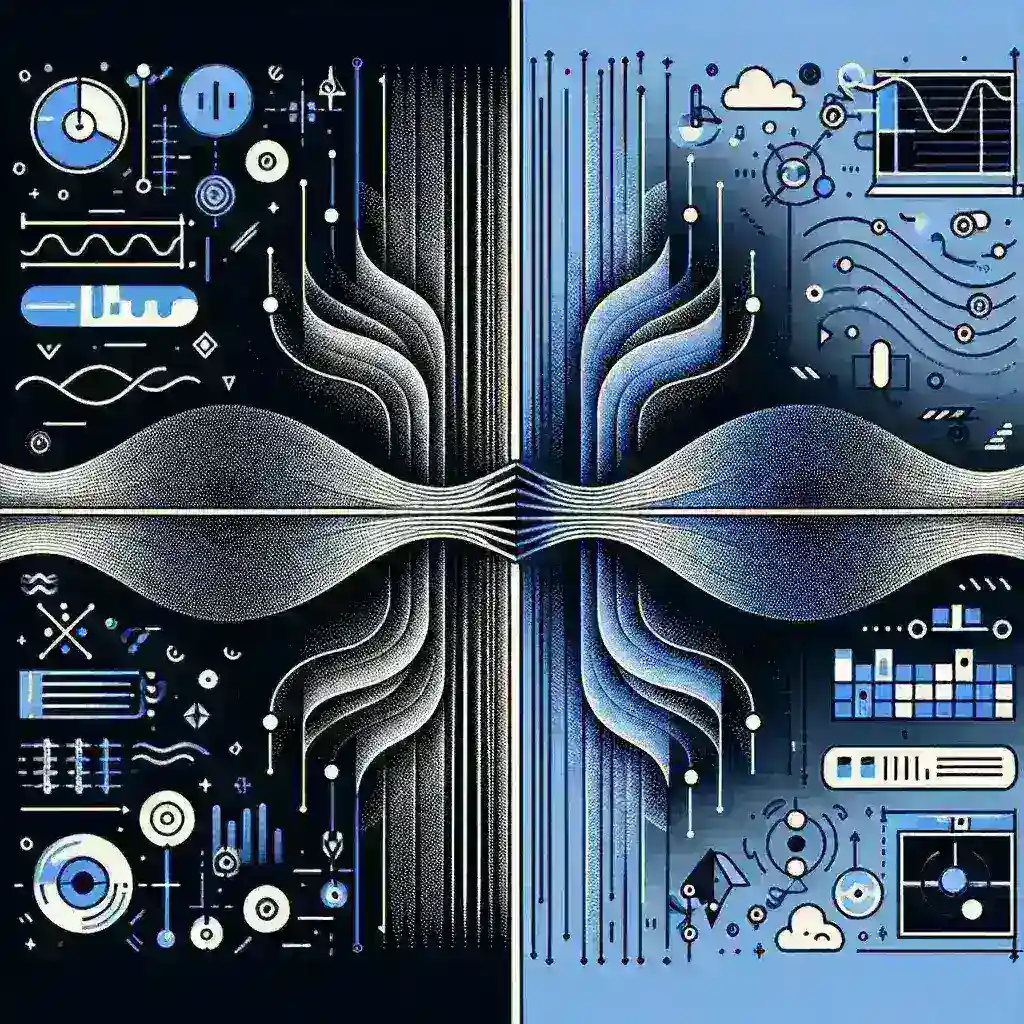
Interlaced scanning operates on a fascinating principle that divides each complete frame into two separate fields. The first field contains all the odd-numbered horizontal lines (1, 3, 5, 7, and so forth), while the second field encompasses all the even-numbered lines (2, 4, 6, 8, etc.). These fields are displayed sequentially, creating the illusion of a complete image through rapid alternation.
The technical specifications of interlaced systems typically involve displaying each field at 60 Hz in NTSC regions or 50 Hz in PAL/SECAM territories. This means that while individual fields refresh rapidly, complete frames are actually displayed at 30 Hz (NTSC) or 25 Hz (PAL). The human eye’s persistence of vision fills in the gaps, creating what appears to be smooth motion.
Advantages of Interlaced Scanning
- Bandwidth Efficiency: Requires approximately half the bandwidth compared to progressive scanning at equivalent frame rates
- Reduced Flicker: Higher field refresh rates minimize visible screen flicker in CRT displays
- Legacy Compatibility: Maintains compatibility with existing broadcast infrastructure and older equipment
- Cost-Effective Production: Lower data transmission requirements reduce broadcasting costs
Limitations and Drawbacks
Despite its historical importance, interlaced scanning presents several challenges in modern applications. Interlacing artifacts become particularly problematic when displaying fast-moving content or fine horizontal details. These artifacts manifest as visible line structures, combing effects, and temporal inconsistencies that can significantly degrade image quality.
Motion blur represents another significant concern with interlaced systems. When objects move quickly across the screen, the temporal offset between odd and even fields creates a characteristic “combing” effect where moving edges appear jagged or serrated. This phenomenon becomes especially noticeable during sports broadcasts, action sequences, or any content featuring rapid horizontal movement.
Progressive Scanning: The Modern Alternative
Progressive scanning takes a fundamentally different approach by displaying complete frames sequentially, line by line, from top to bottom. Unlike interlaced systems, progressive scanning presents all horizontal lines of each frame simultaneously, eliminating the field-based structure entirely. This methodology aligns more closely with how computer monitors and modern digital displays naturally operate.
The technical implementation of progressive scanning involves refreshing the entire screen at consistent intervals, typically 60 Hz, 120 Hz, or even higher frequencies in premium displays. Each complete frame contains all the spatial information for that moment in time, providing a more accurate representation of motion and detail.
Benefits of Progressive Scanning
- Superior Image Quality: Eliminates interlacing artifacts and provides sharper, cleaner images
- Better Motion Handling: Reduces motion blur and provides smoother representation of moving objects
- Computer Compatibility: Naturally compatible with computer graphics and digital content creation workflows
- Scalability: Easier to upscale or downscale for different display resolutions
- Future-Proof Design: Better suited for high-definition and ultra-high-definition content
Technical Comparison and Performance Analysis
When comparing these technologies from a technical perspective, several key metrics highlight their fundamental differences. Temporal resolution represents one of the most significant distinctions. Progressive scanning provides true temporal accuracy, capturing motion at the specified frame rate without the temporal offset inherent in interlaced systems.
Spatial resolution considerations also vary between the two approaches. While both systems can theoretically achieve similar vertical resolution numbers, progressive scanning delivers this resolution consistently across the entire frame. Interlaced systems, conversely, achieve their stated resolution only when combining both fields, and this combination process can introduce various artifacts.
Bandwidth and Data Requirements
From a data transmission standpoint, progressive scanning demands significantly more bandwidth than interlaced alternatives. A 1080p progressive signal requires approximately twice the data rate of a 1080i interlaced signal at equivalent frame rates. This increased bandwidth requirement has historically limited progressive adoption in broadcast television, though modern compression technologies and increased transmission capacity have largely addressed these concerns.
Real-World Applications and Industry Adoption
The practical applications of these scanning methods vary significantly across different industries and use cases. Broadcast television continues to utilize interlaced scanning for many standard definition and some high-definition transmissions, particularly in regions where legacy infrastructure and bandwidth limitations persist.
Computer monitors and gaming displays have universally adopted progressive scanning due to its superior compatibility with digital graphics systems. The gaming industry particularly benefits from progressive scanning’s reduced motion artifacts and improved responsiveness, making it essential for competitive gaming and immersive experiences.
Professional Video Production
Professional video production workflows have largely transitioned to progressive scanning formats, especially for content intended for digital distribution platforms. Progressive formats simplify post-production processes, eliminate deinterlacing requirements, and provide greater flexibility for multi-platform content delivery.
Streaming services and digital content platforms exclusively utilize progressive scanning formats, recognizing their superior quality and compatibility with modern viewing devices. This industry shift has accelerated the adoption of progressive technologies across consumer electronics.
Modern Display Technology Integration
Contemporary display technologies have evolved to handle both scanning methods effectively, though with varying degrees of optimization. LCD and OLED displays are inherently progressive devices, requiring deinterlacing processing when displaying interlaced content. This processing can introduce latency and potential quality degradation, making native progressive content preferable.
Advanced display processors now incorporate sophisticated deinterlacing algorithms that can effectively convert interlaced content to progressive formats. These systems analyze motion patterns, edge detection, and temporal relationships to reconstruct missing line information and reduce artifacts.
Future Considerations and Technology Evolution
Looking toward the future, progressive scanning continues to dominate new technology developments. 4K, 8K, and emerging ultra-high-definition standards exclusively utilize progressive scanning methods, reflecting the industry’s commitment to this approach for next-generation content.
Virtual reality and augmented reality applications demand the temporal accuracy and reduced artifacts that only progressive scanning can provide. These immersive technologies require precise motion tracking and minimal visual artifacts to prevent user discomfort and maintain immersion.
Making the Right Choice for Your Applications
Selecting between interlaced and progressive scanning depends on various factors including content type, target audience, distribution methods, and technical constraints. For new projects and modern applications, progressive scanning generally provides superior results and future compatibility.
Legacy content and broadcast applications may still benefit from interlaced approaches, particularly when bandwidth limitations or compatibility requirements take precedence over absolute image quality. However, the ongoing industry transition toward progressive formats suggests that these use cases will continue to diminish over time.
Understanding these fundamental differences empowers content creators, broadcasters, and technology professionals to make informed decisions about their video systems and workflows. As display technology continues advancing, the principles underlying these scanning methods remain relevant for optimizing visual experiences across all applications.